

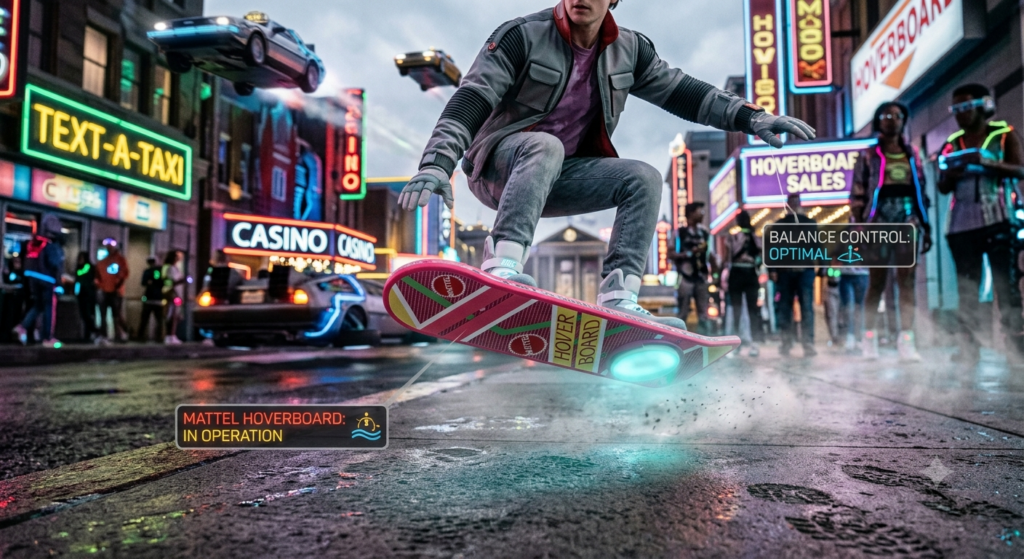
Most “future tech” in film exists to threaten us. Surveillance states, rogue AI, screens that isolate rather than connect — dystopia is dramatically convenient, so it’s the default. Back to the Future Part II (1989) is a rare exception: its 2015 is dense with technology, but almost none of it alienates anyone. That makes it a surprisingly useful reference point for UX and product designers, not just a nostalgia trip.
A few details worth pulling into a moodboard:
Voice as a first-class interface
“Fruit, please” retracts a hanging fruit basket — no app, no menu, just a spoken request answered by the environment itself. It’s ambient computing three decades before the term existed.
Wearables that finish a task quietly
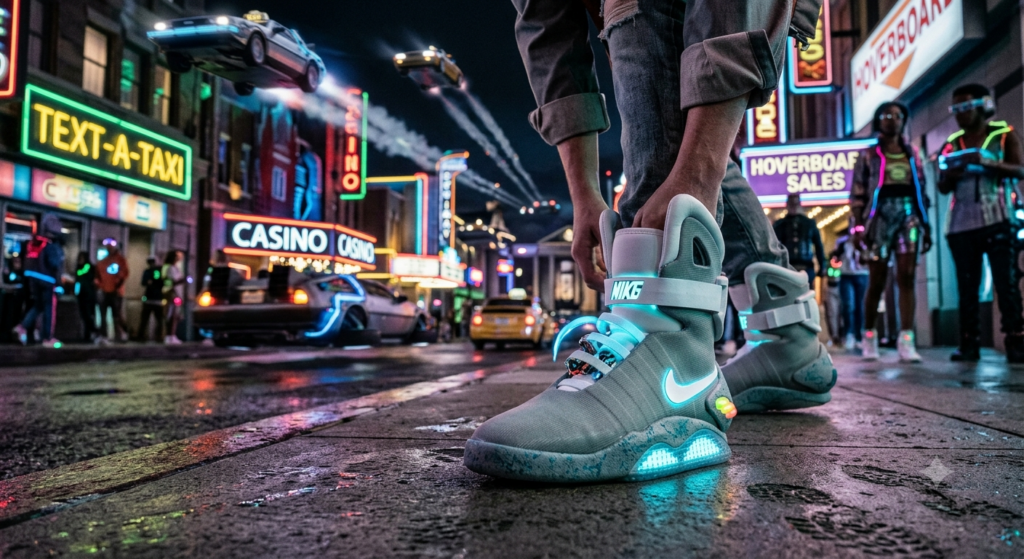
self lacing shoes inspired by BTTF2 – AI gen by Gemini
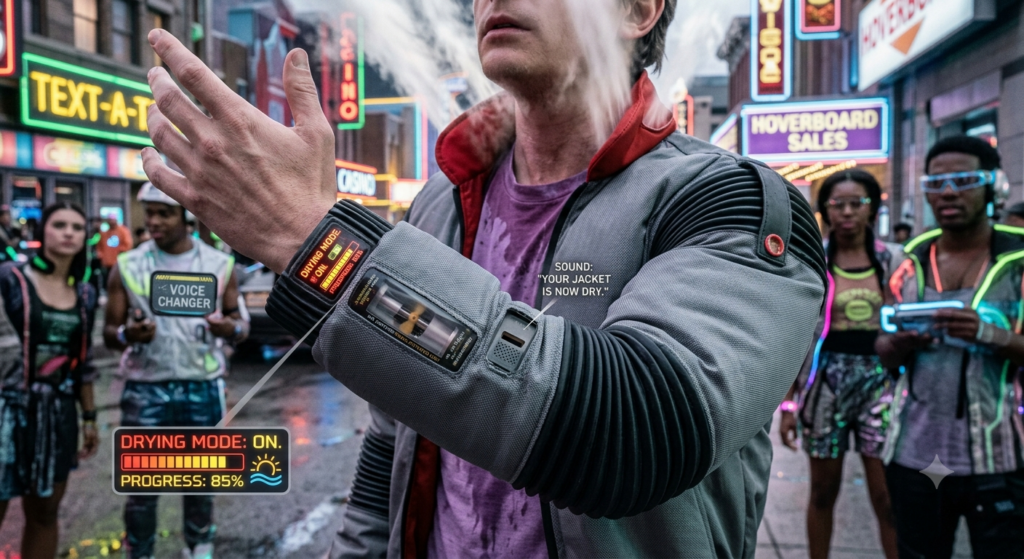
futuristic jacket with drying mode – AI gen by Gemini – based on BTTF 2
The self-lacing shoes and the jacket’s auto-dry mode don’t demand attention. They confirm completion (“your jacket is now dry”) and get out of the way — a good model for notification design: inform, don’t interrupt.
Plasma flat-screens – multi-channel, not algorithmic
The six-channel display is closer to a control room than a feed. You choose what’s on screen; nothing is choosing for you. There’s no engagement-optimized scroll, which is part of why the scene doesn’t read as sinister.
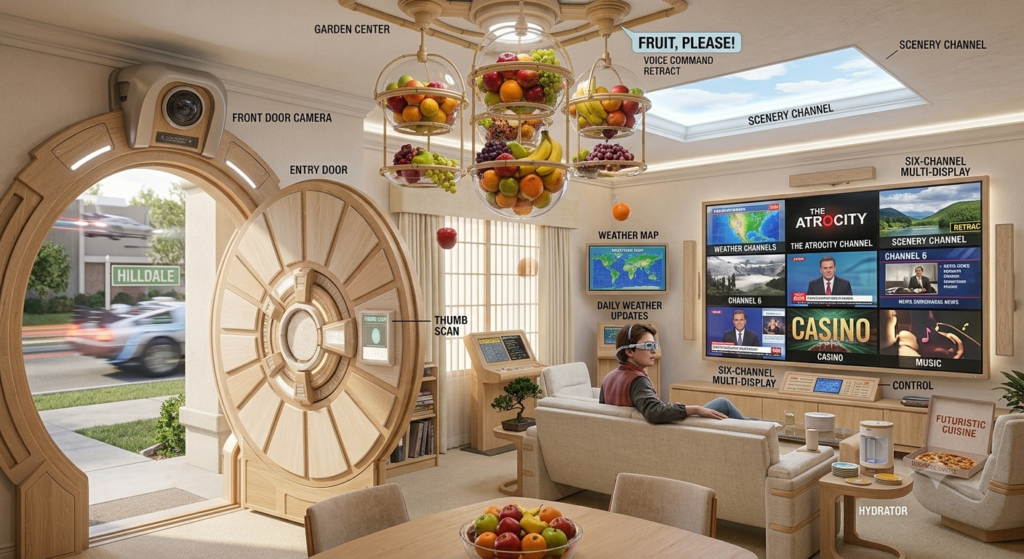
Futuristic home with voice interface – AI gen by Gemini – based on BTTF 2
Physical access with a human layer
Thumb-scan entry and a front-door camera exist, but they sit alongside a garden center and a bowl of fruit on the table — security tech as one convenience among many domestic ones, not the point of the house.
Even the “screen time” scene is fine
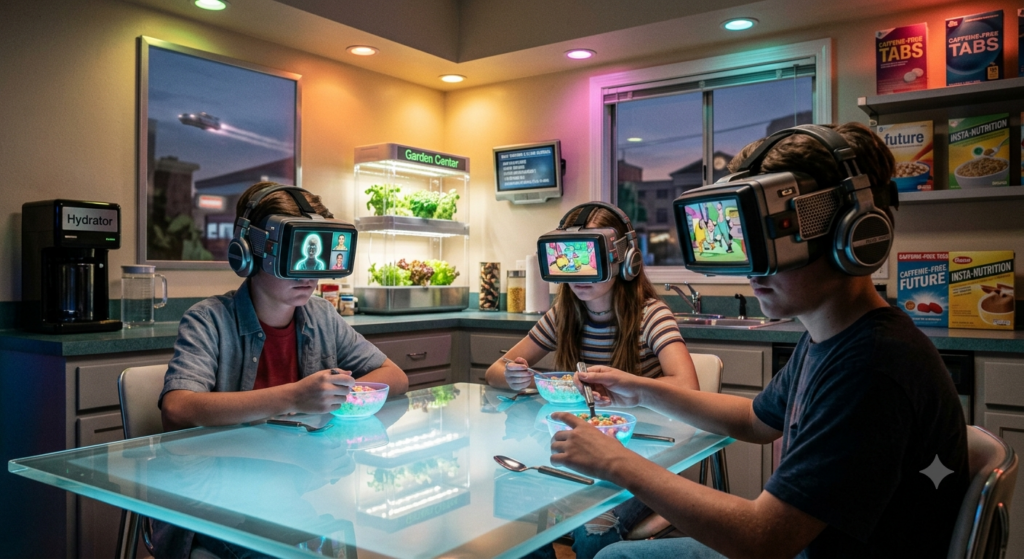
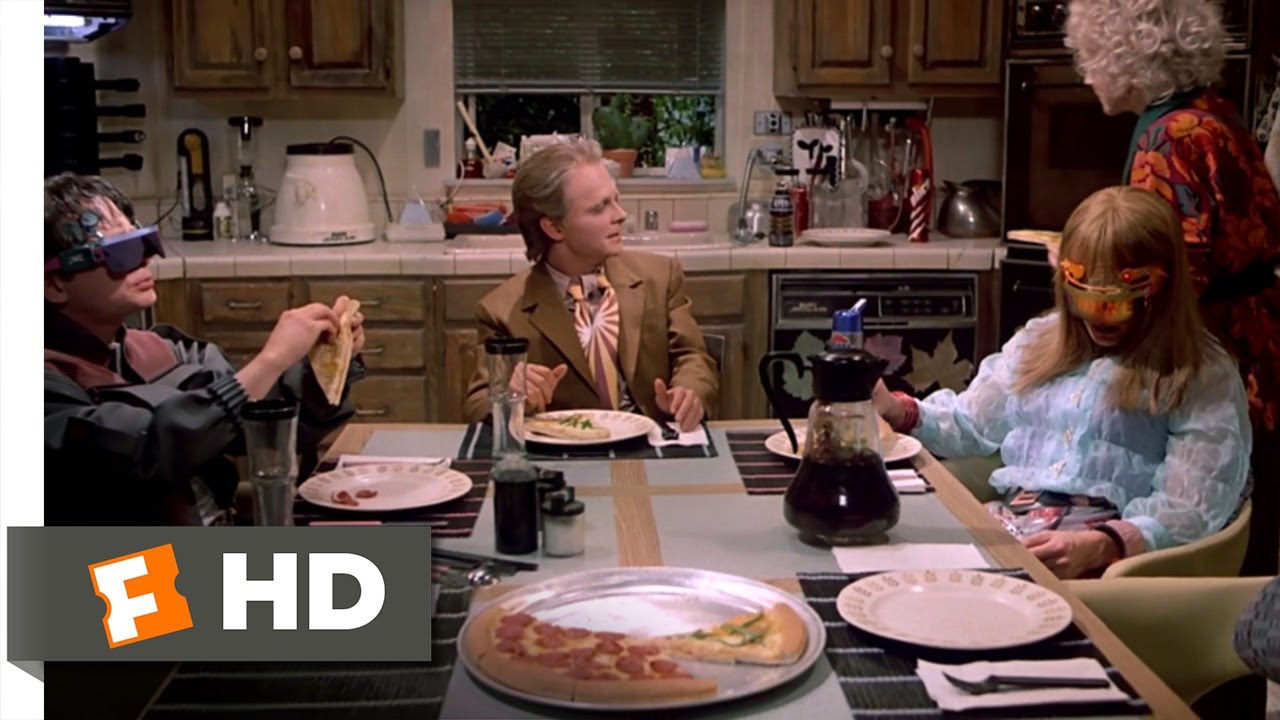
Children wearing HMDs while eating inspired by BTTF2 – AI gen by Gemini
Kids at breakfast wearing headsets, watching cartoons and taking a call at the table — the closest BTTF2 gets to a cautionary note, and it plays as mundane family life, not alarm.
None of this is technically sophisticated by today’s standards. What it gets right is tone: technology as a set of small, legible conveniences, not an invisible system working against the humans using it. That’s a useful check for any interface — does it feel like a fruit basket, or like a surveillance camera?
Other films worth the same lens:
- Star Trek (various) — technology as post-scarcity abundance rather than control
- Big Hero 6 — a robot designed purely around care
- The Incredibles — gadgets as tools for family connection, not distance
- Iron Man — wearable tech as empowerment rather than threat
- Zenon: Girl of the 21st Century — closest tonal cousin to BTTF2’s gadget-happy optimism
- Tomorrowland — Disney’s explicit pitch for techno-optimism over dystopia