


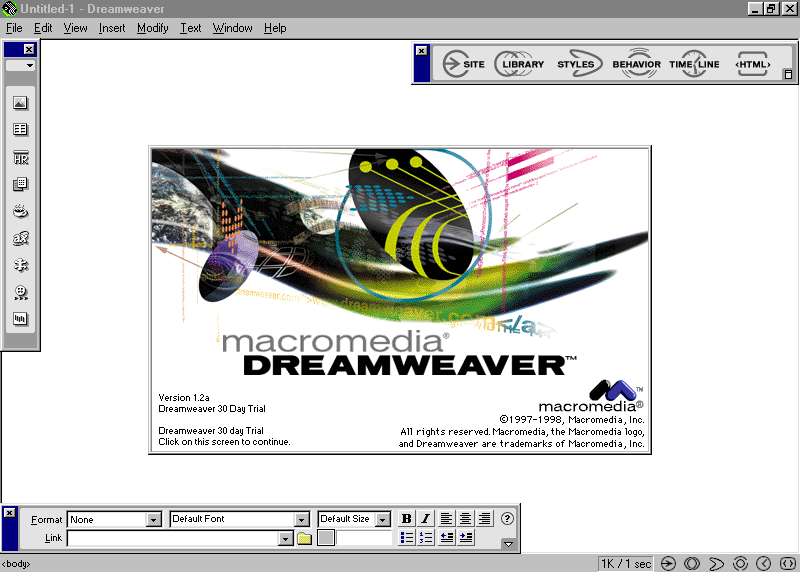
How did a sculptor end up in UX? For me, the answer has a name, a version number, and a splash screen I can still see when I close my eyes: Macromedia Dreamweaver.
This is a story about the tool that taught me the web — and about the remarkable piece of UX research hiding inside its origin story. Because before Dreamweaver was software, it was a document. A collection of dreams, literally.
But let’s start in Belgrade, in 2003.
The sculptor who needed a website
I had just finished the Faculty of Applied Arts, where I studied sculpture. Clay, plaster, bronze — things you touch. Pixels were not part of the curriculum.
My plan was to go to France and apply for a master’s scholarship, and I figured my application would be stronger with a personal website. A portfolio you could visit from anywhere in the world? In 2003, that still felt slightly magical.
So I did what any reasonable person does: I asked my older brother, Ranko, to make it for me. He was the tech-savvy one — he and his best friend had taught themselves early Photoshop and web design purely out of curiosity, while officially studying economics.
His answer changed my life:
“No. I’ll show you how to do it in Macromedia Dreamweaver, and you’ll make it yourself. If you get stuck, I’m here.”
I was annoyed for about a day. Then I opened Dreamweaver.
Learning to think in interfaces
Dreamweaver in those days had a split personality — in the best possible way. On one side, a visual canvas where you could drag things around like a design tool. On the other, the actual HTML code. And here’s the thing that made it special: you could switch between the two, and it wouldn’t destroy your work.
That doesn’t sound revolutionary until you know what the alternatives did. Other editors of that era would quietly “fix” your code — injecting their own tags, bloating your markup, breaking things you’d carefully written by hand. Dreamweaver left your code alone. They called it Roundtrip HTML, and for people learning the web, it meant something profound: you could see how design decisions became code, and how code became design.
For a sculptor, this clicked instantly. It was material. You could shape it, and it pushed back honestly.
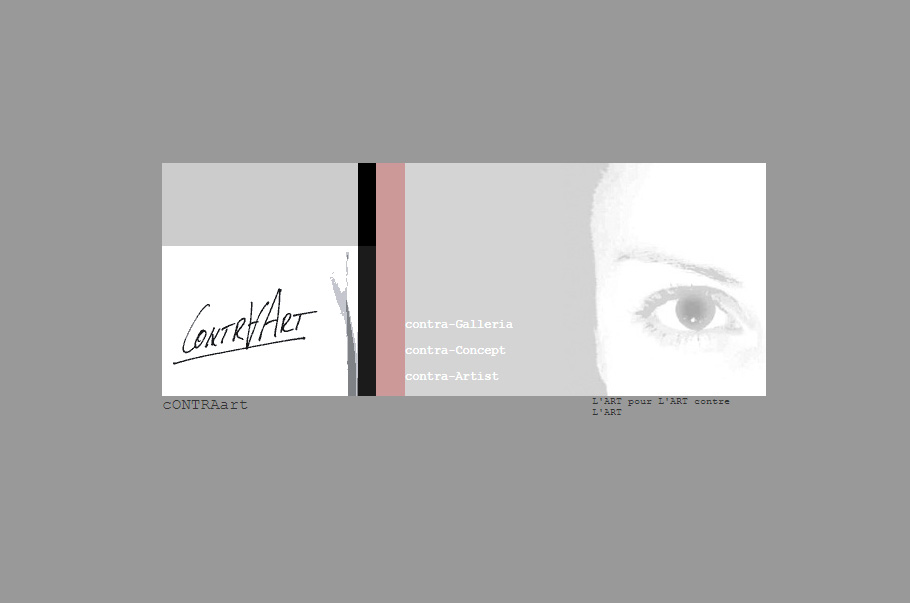
My site went live: CONTRAart — you can still visit the 2004 version in my archive (I lost the original 2003 one, which stings a little). Minimal, monochrome, one eye staring back at the visitor. L’art pour l’art contre l’art. I was very serious about art back then.
And France? I didn’t get the scholarship. Instead, I entered a master’s — and later a PhD — in Polymedia Art in Belgrade. But building that website opened doors I didn’t even know existed. It’s how design, interfaces, and eventually UX research became my life.
Years later, I found out that Dreamweaver itself was born from a very UX way of thinking. Which brings us to the exhibit portion of this post.
Exhibit: The “19 Dreams” document (1996)
In October 1996, Macromedia decided to build a web editing tool. They put a man named Kevin Lynch in charge — and instead of locking a team of engineers in a room to guess what designers wanted, Lynch did something that today we’d put on a slide and call discovery research.
He went out and talked to web designers. For months.
He asked about the hurdles they faced. The workarounds they hated. And one question that mattered most: what would the perfect web editing tool look like? He wrote everything down — not as feature requests, but as stories. Then he compiled them into an internal document with a wonderful title: 19 Dreams.
That document became the team’s roadmap. By 1997, they had built software that addressed all nineteen dreams. And when it came time to name it, the answer was sitting right there in the research: a tool woven from dreams. Dreamweaver.
What the dreams asked for
Don’t touch my code. The single loudest wish. Designers were tired of editors that corrupted their handwritten markup. Roundtrip HTML — the feature that taught me the web — came directly from listening to that frustration.
Let me work both ways. Visual when I’m designing, code when I’m precise. One integrated workflow, not two separate tools fighting each other.
Let me extend it. The web was changing monthly. Dreamweaver’s later extension system — thousands of user-contributed add-ons written in JavaScript — kept the tool evolving alongside the standards.
Build what we actually need, not what you assume we need. This one wasn’t a feature. It was the method itself.
Did it work? By October 1999, an estimated 66% of professional web developers were using Dreamweaver. In a market crowded with editors, the one built on qualitative research won — decisively.
The placard on the wall
Every exhibit in this museum gets a placard, so here’s this one:
Kevin Lynch didn’t ask designers what buttons they wanted. He asked what they dreamed of, listened to their stories, and treated their frustrations as design requirements. That’s user-centered design before most of us had the vocabulary for it — a discovery process from 1996 that would hold up in any research repository today.
And my brother, in his own way, did the same thing. He didn’t give me a website. He gave me the tool, the confidence gap to cross, and a safety net: “If you get stuck, I’m here.”
The best mentors — and honestly, the best tools — don’t do the work for you. They make you capable, then stay close.
I never made it to France. I made it somewhere better: into a career built on understanding how people and interfaces meet. And it all started with a splash screen, a stubborn brother, and nineteen dreams written down by someone who bothered to listen.
This post is part of the Interface History series at the Museum of UX. If you have your own “first website” story, I’d genuinely love to hear it.